Once upon a time (cliché) I started to study (alliteration and sibilance) rhetoric and figures of speech (tautology), and because I’m an absolute idiot (understatement) I decided to embed the learning by writing a short poem about each one (anti-climax). The results were somewhat less than spectacular (litotes). In fact ‘litotes’, a term describing the figure of speech whereby we state or imply one thing in order to emphasise the opposite (usually for very negative or positive effect) and pronounced, “lih-toe-tees”, was one of the three or four that I managed to write before I gave the whole thing up as a bad idea. See for yourself:
Litotes
Dating him isn’t all bad, she thought. It could be worse
He’s no Adonis, and he doesn’t quite fit in his shirts.
He could tidy up more and his cooking could be better.
And he could use more common sense because he’s not that clever.
He’ll never win an Oscar, never run a marathon,
His sense of fashion in the 80s is something we won’t dwell upon.
I won’t play his CDs in the car until his choices are less dour.
I couldn’t stand to hear him sing much longer in the shower.
I can say all these things to him, although he hates complaints like these
Because surprisingly enough, he’s never heard of litotes.
The best thing that you can say about it is that I was inspired by Wendy Cope’s poem “Faint Praise”; a phrase, like the poem it recalls, also being an example of litotes.
I never gave up wanting to learn more about them. I listened to the audiobook of Mark Forsyth’s ‘The Elements of Eloquence’ (sassily and snarkily spoken by Simon Shepherd), I collected new examples that I found in writing and on the web, and I made digital flashcards out of them which helped me understand that I do not learn anything from using flashcards.
And then, one day, while I was in the shower, which is where I often do my best thinking and my worst singing, it occurred to me that in order to learn these figures I needed an appropriate setting. I needed some way of locating them within a context that was both informative and memorable, something that I could readily quote from memory, that would help illustrate concepts and examples. If only there was a way to make it like A-B-C, as easy as 1-2-3, as simple as Do Re Me… and that’s literally how the idea came about. I would, I decided, collect as many rhetorical, grammatical and syntactical devices as I could, and find examples from pop songs to help us all understand them. And by ‘pop’ I really do mean ‘popular music’, and I reserve the right to plunder from rock and R&B, soul and skiffle, glitch and gaba as required.
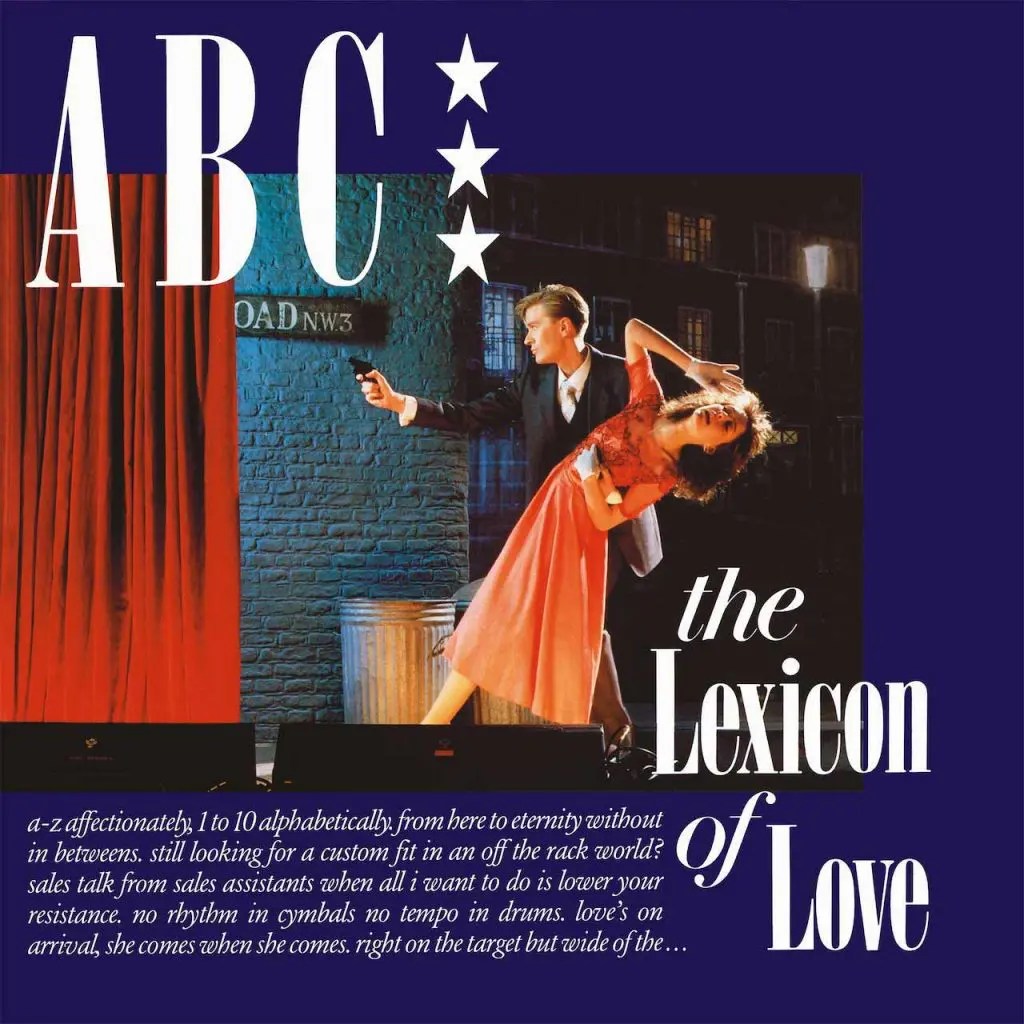
The last piece of the puzzle was a name. Names are so important to me; they set my mental expectations, like knowing the genre of a book. I needed a name that (like me) was camp, eloquent, and often dressed in a gold lamé suit. And so, taking inspiration from the 12th bestselling album of 1982 in New Zealand, “The Lexicon of Pop” was born.
There’s also a more serious side to this. Like a lot of people in my social media echo chamber, there’s weariness of social media in general. Posting has now become such hard work and the days of “twitter on the shitter” and of spewing 140 characters of word salad every time you have 6 unoccupied seconds are long gone. The emphasis is on such heavy curation, social media is no longer any fun. And that’s not taking into account how hate-filled social media spaces have become; and when they are not hate-filled, they are AI slop-filled. The emphasis on short-form video that is chosen for you destroys any semblance of social; sharing has become asynchronous.
I regularly see Gen X speaking on-line about how much they lament that blogging has died. Not those overly polished travel influencers who get paid to stay in Abu Dhabi hotels, or mummy bloggers who use their children as content. But real people, just talking about their lives, obscure obsessions that they harbour, or random shit that they are into. The comments of those blogs were the original media. That’s where you got to know people.
And that last – random shit – is really where I come in. I love writing, but I struggle when I don’t have a purpose. I worry too much about what the audience needs from me, but that’s what I’m trying to change here. I wanted to pick something that I was hugely into (pop music) alongside a purpose (learning something new about language, but also the mental health benefits of being creative).
“When you blog purely for the intrinsic joy of the craft—the mental exercise of untangling an idea, crafting a sharp sentence, and playing with language—it transforms from a performance into a genuine creative sanctuary.And ironically, that “writing for an audience of one” approach is almost always what produces the best, funniest, and most authentic work. When you aren’t trying to game an algorithm or chase engagement, you have total freedom to be as pedantic, absurd, and ridiculously niche as you want.”
And what could be more pedantic, absurd and ridiculously niche than examining pop music lyrics to learn about language?
 It's a Queer Old Blog...
Leave a comment